
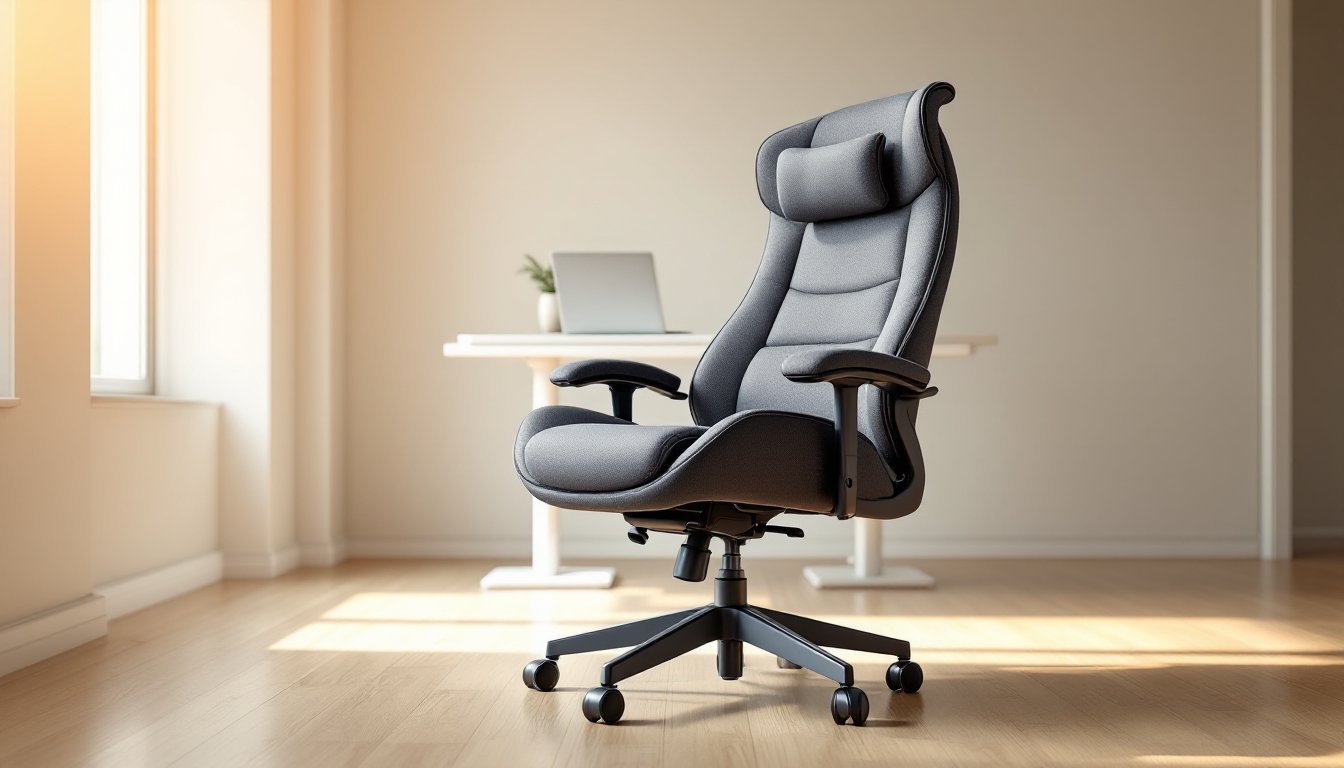
Setting up a home office isn’t just about choosing a desk and plugging in a laptop. The chair is where most people spend six to eight hours a day, and if it doesn’t fit properly, the result is back pain, poor posture, and constant fidgeting. Standard office chairs work fine for some, but they’re designed around average dimensions. For taller individuals, those with broader frames, or anyone who simply wants more room to move, a large office chair isn’t a luxury, it’s a necessity. This guide breaks down what to look for, how to match a chair to a space, and which features actually matter when shopping for a larger, more supportive seat.
Table of Contents
ToggleKey Takeaways
- A large office chair with a wider seat pan (20-24 inches) and taller backrest (22+ inches) prevents back pain, poor posture, and circulation issues caused by standard undersized chairs.
- Look for a large office chair rated for at least 300 pounds with a reinforced steel frame, Class 4 gas lift cylinder, and proper casters to ensure long-term stability and durability.
- Essential adjustability features include seat height range (4-6 inches), movable lumbar support, and armrest width adjustment (22-24 inches apart) for personalized ergonomic comfort.
- Measure your desk height, floor clearance, and available base space before purchasing; a large office chair typically needs a 36-inch radius of clear floor and proper caster type for your flooring.
- Budget $250 to $1,500 for a quality large office chair with steel frame construction, commercial-grade upholstery, and at least 3-5 years warranty on structural components.
- Choose a style—executive leather, mesh ergonomic, gaming, big-and-tall, or mid-century modern—based on your aesthetic preference and adjustability needs for your home office.
Why Size Matters: Understanding the Benefits of Large Office Chairs
A chair that’s too small creates pressure points, restricts circulation, and forces awkward posture adjustments throughout the day. Large office chairs address these problems with wider seat pans, taller backrests, and reinforced frames.
Wider seat pans, typically 20 to 24 inches across, allow for natural hip positioning without compression. Standard chairs hover around 18 to 20 inches, which leaves little margin for comfort if someone wears bulky clothing or simply prefers not to feel wedged in.
Taller backrests support the full length of the spine, from lumbar region to shoulder blades. Most large chairs extend to at least 22 inches in backrest height, compared to 18 to 20 inches on standard models. This extra coverage prevents upper back strain, especially during long video calls or focus sessions.
Reinforced frames matter more than most buyers realize. A large office chair rated for 300 to 500 pounds uses thicker gauge steel, wider bases (usually 27 to 30 inches in diameter), and Class 4 gas lift cylinders. That’s not just about weight capacity, it’s about long-term stability. A chair that wobbles or sags after six months is a waste of money, no matter the initial price.
Large chairs also tend to include deeper seat cushions, often 20 to 22 inches from front edge to backrest. This prevents the front edge from digging into the back of the thighs, a common complaint with shallow seats. Proper thigh support improves circulation and reduces the urge to constantly shift positions.
Key Features to Look for in a Large Office Chair
Not all large chairs are built the same. Some just scale up a standard design without addressing the ergonomics. Others pack in adjustability that actually matters. Here’s what separates a solid pick from a gimmick.
Weight Capacity and Frame Durability
Weight capacity is the first spec to check. Look for chairs rated at 300 pounds minimum, even if personal weight is lower. Higher capacity ratings correlate with stronger frames, better gas lifts, and more durable casters.
The frame material should be steel, not plastic or particleboard. Some budget chairs hide composite frames under thick upholstery, check product specs or reviews for confirmation. Steel frames with powder-coated finishes resist rust and handle daily stress without flexing.
Gas lift cylinders are rated by class, with Class 4 being the standard for heavy-duty office chairs. Class 3 cylinders, common in cheaper models, wear out faster and may fail suddenly (a safety concern). Class 4 units are tested to at least 150,000 compression cycles.
Casters matter more than expected. Large chairs need 3-inch diameter casters with smooth-rolling bearings. Smaller casters (2 to 2.5 inches) bog down on carpet and wear unevenly. For hard floors, rubber-coated or polyurethane casters prevent scratches. For carpet, hard plastic or nylon casters bite into the pile better.
Adjustability Options for Personalized Comfort
A chair with no adjustability is just an expensive bench. Large office chairs should offer at least these controls:
Seat height adjustment is baseline, every chair has it. The range matters more than the feature itself. Look for a 4 to 6 inch height range to accommodate different desk heights and leg lengths. Pneumatic levers are standard: if it’s a twist knob or pin mechanism, move on.
Lumbar support adjustment comes in two forms: fixed lumbar pads (cheap, limited use) and adjustable lumbar mechanisms that move up, down, and sometimes in/out. The latter is worth the extra cost. Lumbar support should sit at the natural curve of the lower back, roughly belt-line height. If it can’t move, it won’t fit everyone.
Armrest adjustability varies widely. Basic chairs offer height adjustment only. Better models add width, angle, and depth adjustments. For large chairs, width matters most, armrests should move outward to at least 22 to 24 inches apart. Fixed-width armrests force elbows inward, causing shoulder tension.
Tilt tension and tilt lock let users control how much resistance the backrest offers when leaning back. Tilt tension adjusts via a knob under the seat, tighter for heavier users, looser for lighter ones. Tilt lock freezes the backrest at a set angle, useful for tasks that don’t require leaning.
Recline range on large chairs often extends to 135 degrees, compared to 120 degrees on standard models. Some include infinite tilt lock, meaning the backrest locks at any angle, not just upright or fully reclined. This flexibility supports micro-breaks without leaving the chair.
Top Styles of Large Office Chairs for Different Home Office Aesthetics
Large office chairs come in several styles, each with trade-offs in comfort, durability, and visual fit.
Executive leather chairs are the classic choice, high backs, padded armrests, and bonded or genuine leather upholstery. They project authority and pair well with traditional wood desks. Bonded leather looks good initially but peels after a year or two. Full-grain or top-grain leather lasts decades but costs significantly more. For a home office, modern design enthusiasts often prefer sleek leather finishes over bulky tufted styles.
Mesh-back ergonomic chairs prioritize breathability and adjustability. The mesh conforms to the spine without trapping heat, ideal for warmer climates or spaces without AC. Look for dual-layer mesh with separate lumbar support: single-layer mesh stretches out and loses support over time. Frames are usually black or gray, which fits minimalist or tech-focused offices.
Gaming chairs have crossed into mainstream home offices. They feature bucket-seat designs, bold colors, and heavy padding. Weight capacities often exceed 350 pounds, and the steel frames are built for long sessions. The aesthetic is polarizing, great for a casual workspace, out of place in a professional Zoom background. Padding is thick but can compress faster than high-density foam found in ergonomic chairs.
Big-and-tall task chairs are purpose-built for larger frames. Seat pans range from 22 to 24 inches wide, backrests extend above 24 inches, and weight ratings reach 500 pounds. They lack the flashiness of executive or gaming chairs but deliver on core ergonomics. Upholstery is usually commercial-grade fabric or vinyl, chosen for durability over style.
Mid-century modern large chairs blend retro design with contemporary comfort. Walnut or teak armrests, curved plywood backs, and neutral upholstery fit well in design-forward spaces. These chairs rarely offer the same level of adjustability as mesh or task chairs, so they’re better for users who don’t need constant position changes. Many interior design guides highlight these for blending function with visual appeal.
How to Choose the Right Large Office Chair for Your Space and Needs
Buying a chair online without measuring first is a common mistake. Start by measuring the workspace.
Desk height should allow elbows to rest at 90 degrees when typing. Standard desks are 29 to 30 inches tall. Adjustable standing desks range from 24 to 50 inches. The chair’s seat height range must overlap with the desk height. For a 30-inch desk, seat height should adjust from roughly 17 to 21 inches.
Clearance under the desk determines armrest height. Measure from the floor to the underside of the desk. Subtract 2 inches for wiggle room. If that number is less than the chair’s lowest armrest height, the armrests won’t fit. Some chairs let armrests flip up or come off entirely, useful for tight spaces.
Floor space for the base and caster swing matters more with large chairs. A 30-inch diameter base needs at least a 36-inch radius of clear floor to roll freely. For tight corners, consider a smaller base or a chair with a stationary frame.
Flooring type affects caster choice. Hard floors (wood, tile, laminate) need soft rubber or polyurethane casters to prevent scratches and reduce noise. Carpet requires hard nylon or plastic casters to roll smoothly without snagging. Most chairs ship with hard casters: soft casters are sold separately or can be requested from the manufacturer.
Weight and portability become issues if the chair needs to move between rooms. Large office chairs weigh 40 to 70 pounds. Some include built-in handles on the backrest for easier lifting. If stairs are involved, recruit help, trying to muscle a 60-pound chair solo risks back strain or damage to walls.
Assembly requirements vary. Most chairs arrive in 4 to 8 pieces: base, gas lift, seat/backrest unit, armrests, and headrest (if included). Assembly takes 20 to 45 minutes with basic tools (usually an Allen wrench, included). Some high-end models ship fully assembled but cost more and require freight delivery.
Budget for a decent large office chair starts around $250 and climbs to $1,500 for premium ergonomic or designer models. Spending under $200 usually means compromises in frame quality, upholstery durability, or adjustability. For creative DIY modifications, some buyers start with a sturdy base model and upgrade the cushion or add lumbar pillows, though this voids most warranties.
Warranty coverage should include at least 3 to 5 years on structural components (frame, base, gas lift) and 1 to 2 years on upholstery and foam. Read the fine print, some warranties exclude commercial use or require professional assembly to remain valid.
Conclusion
A large office chair isn’t just about extra inches, it’s about proper support, long-term durability, and ending the workday without aches. Measure the space, check weight capacity and adjustability specs, and match the style to the room’s aesthetic. Cutting corners on frame quality or skipping adjustability leads to buyer’s remorse. Invest in a chair that fits the body and the workspace, and it’ll pay off in comfort and productivity for years.