
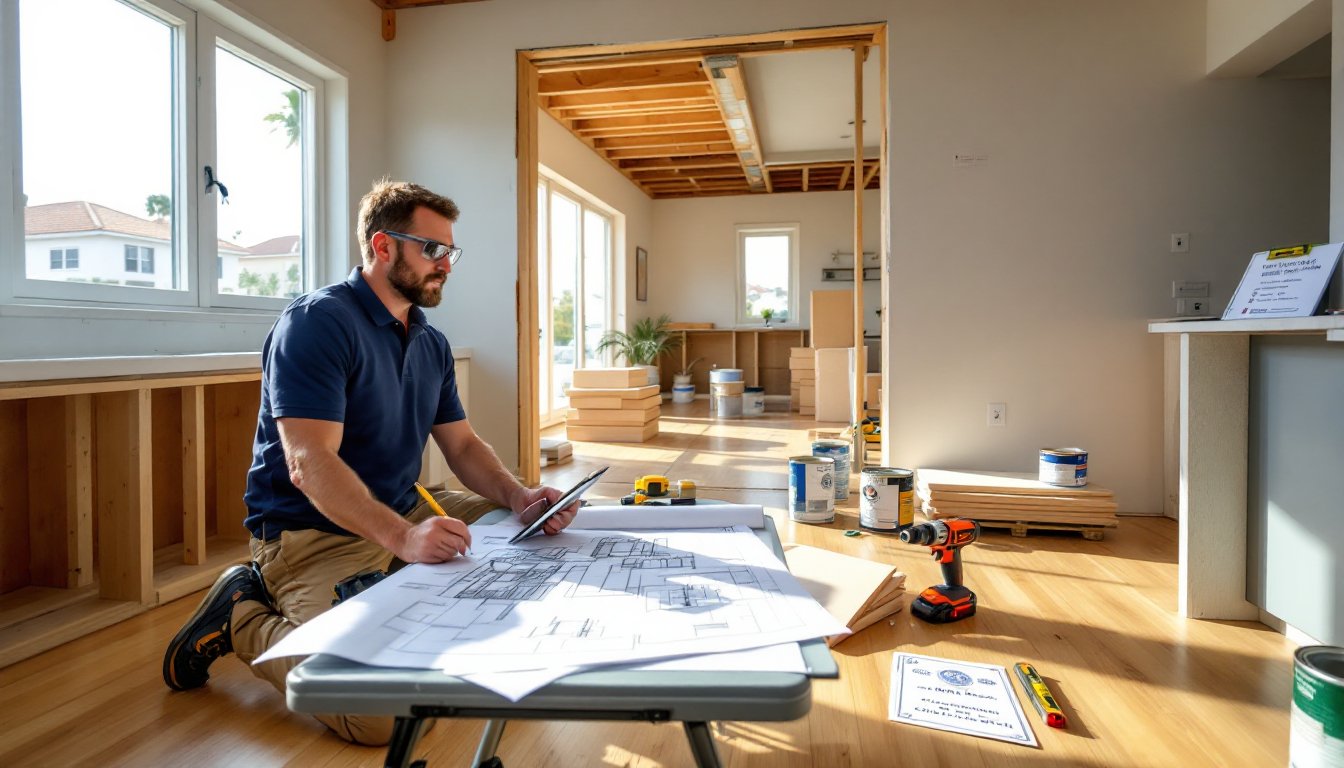
Solana Beach’s unique coastal climate and architectural character demand more than generic remodeling approaches. Salt air, moisture, and the area’s distinct building regulations shape every renovation decision, from material selection to contractor qualifications. Whether it’s opening up a kitchen to capture ocean views or upgrading a bathroom to withstand humidity, homeowners here face specific challenges that inland projects never encounter. This guide walks through what makes coastal remodeling different, which projects deliver the best return, how to vet contractors familiar with local codes, and what realistic budgets look like in this premium market.
Table of Contents
ToggleKey Takeaways
- Home remodeling services in Solana Beach require specialized expertise in coastal materials like stainless steel fasteners and marine-grade sealants to prevent salt-air corrosion and moisture damage.
- Kitchen and bathroom renovations in Solana Beach demand proper ventilation (400+ CFM for kitchens, 50–80 CFM for bathrooms) and waterproofing systems to combat year-round humidity.
- California Coastal Commission permits add 60–90 days to project timelines, making local contractor experience with coastal development requirements essential.
- Solana Beach remodeling costs run 15–25% higher than inland markets, with kitchen remodels ranging $55,000–$85,000 and full bathroom upgrades spanning $25,000–$40,000.
- Always verify contractor licensing at cslb.ca.gov, request itemized bids specifying materials and brands, and maintain a 20% contingency budget for hidden coastal construction issues.
Why Solana Beach Homes Need Specialized Remodeling Expertise
Coastal environments accelerate material degradation. Salt spray corrodes metal fasteners, warps untreated wood, and breaks down standard paints faster than anywhere inland. Contractors working in Solana Beach need to specify corrosion-resistant hardware (stainless steel or hot-dipped galvanized), marine-grade sealants, and exterior finishes rated for coastal exposure. Skip this, and you’ll be repainting or replacing trim within two years instead of ten.
Moisture management is critical. Homes within the coastal zone, roughly the first mile from the ocean, face higher humidity year-round. This affects everything from drywall compound drying times to the need for exhaust ventilation in bathrooms and kitchens. Proper flashing around windows, vapor barriers in wall assemblies, and moisture-resistant materials (like cement board instead of standard drywall in wet areas) aren’t optional upgrades here: they’re baseline requirements.
Local building codes add layers of complexity. The City of Solana Beach falls under the California Coastal Commission jurisdiction, which means certain exterior alterations, especially those visible from public view or affecting coastal access, require additional permits beyond standard city approvals. Contractors unfamiliar with this process can cause months of delays. Projects involving structural changes, additions, or significant exterior work often need coastal development permits, and timelines can stretch 60–90 days longer than typical remodels.
Soil and foundation considerations matter. Many Solana Beach properties sit on sandy or unstable soils, and some neighborhoods have documented soil movement issues. Any remodel involving load-bearing walls, second-story additions, or extensive foundation work requires geotechnical assessments and often engineered foundation solutions. A contractor experienced in coastal construction will flag these needs during initial site assessments, not halfway through demo.
Most Popular Home Remodeling Projects for Solana Beach Residents
Kitchen Renovations That Embrace Coastal Living
Open-concept layouts dominate kitchen remodels in Solana Beach, with homeowners removing walls between kitchens and living spaces to maximize ocean views and natural light. This almost always involves relocating or removing a load-bearing wall, which requires an engineer’s stamp and city permits. Expect a structural engineer’s report to run $1,200–$2,500, plus the cost of installing a laminated veneer lumber (LVL) beam or steel I-beam to carry the load.
Material choices lean coastal-durable. Cabinets made from marine-grade plywood or solid hardwood with conversion varnish finishes hold up better than particleboard or MDF in humid conditions. Countertops trend toward engineered quartz rather than natural stone, quartz doesn’t require sealing and resists moisture better. For backsplashes, homeowners favor large-format porcelain tile or glass tile that won’t harbor mold in grout lines the way smaller mosaics can.
Appliance upgrades focus on energy efficiency and ventilation. Gas ranges remain popular, but the 2023 California Title 24 energy code pushes toward induction cooktops in new construction and major remodels. More importantly, coastal kitchens need high-CFM range hoods (at least 400 CFM for a standard 30-inch range) that vent to the exterior, not recirculate. Salt air and cooking moisture create serious indoor air quality issues without proper exhaust.
Bathroom Upgrades for Luxury and Functionality
Primary bathroom expansions are the most requested bathroom project, often borrowing space from adjacent closets or hallways. Homeowners want curbless walk-in showers with frameless glass enclosures, which require careful waterproofing, Schluter or similar membrane systems over cement board, not just tar paper and wire lath. Proper slope to the drain (¼-inch per foot minimum) is non-negotiable, and a contractor who doesn’t mention this in the quote probably cuts corners elsewhere.
Material durability trumps trends. Porcelain tile rated for wet areas (look for a PEI rating of 4 or 5) works better than natural stone, which can stain and requires ongoing sealing. For shower pans, most contractors now use prefabricated acrylic or fiberglass bases or site-built pans with waterproof membranes, traditional mortar beds still work but take longer and cost more. Grout joints should use epoxy grout in showers: it’s harder to install but resists mold and doesn’t need sealing.
Ventilation prevents mold and code violations. California Residential Code (based on IRC) requires bathroom exhaust fans rated for the room’s square footage, typically 50–80 CFM for a standard bathroom. In Solana Beach’s humid climate, undersizing the fan is asking for mold behind walls. Fans should vent to the exterior through rigid or semi-rigid ducting, not into the attic or eaves. If your contractor suggests flex duct that sags and traps moisture, find another contractor.
How to Choose the Right Remodeling Contractor in Solana Beach
Start with California license verification. Every contractor doing work over $500 must hold an active California Contractor’s State License Board (CSLB) license. Check it at cslb.ca.gov, look for a B (General Building) or C-2 (Insulation and Acoustical), C-4 (Boiler, Hot-Water Heating and Steam Fitting), or other relevant C-class license depending on the work. Verify the license is current, bonded, and carries workers’ compensation insurance. Any contractor who hesitates to provide a license number should be an automatic disqualification.
Local experience with coastal projects matters. Ask for references from projects within Solana Beach or neighboring coastal communities (Del Mar, Encinitas). Contractors familiar with the area understand Coastal Commission requirements, know which city inspectors are sticklers for specific details, and have relationships with local suppliers who stock marine-grade materials. If they’ve only worked inland, they’ll face a learning curve on your dime.
Get detailed, itemized bids from at least three contractors. A solid estimate breaks out labor, materials, permits, and subcontractor costs, not just a lump sum. It should specify material brands and grades (not just “tile” but “12×24-inch porcelain, PEI 4 rating” or “Sherwin-Williams Duration exterior paint”). Vague estimates lead to change orders and budget overruns. Many homeowners use contractor comparison tools to see typical ranges for their projects before requesting bids.
Check insurance coverage beyond the minimum. California requires contractors to carry general liability insurance, but verify they carry at least $1 million per occurrence. If they’re working on a multi-story home or doing structural work, consider requiring $2 million. Ask for a certificate of insurance and call the insurer to confirm it’s active, contractors have been known to let policies lapse mid-project.
Permits signal professionalism, not bureaucracy. If a contractor suggests skipping permits to save money or time, walk away. Permitted work gets inspected at key stages (framing, rough electrical, rough plumbing, final), which catches errors before they’re buried in walls. Unpermitted work can tank a home sale, void insurance claims after a failure, and leave you liable for code violations. The city of Solana Beach is small and inspectors know the local contractors, word gets around about who cuts corners.
Understanding Remodeling Costs and Budgeting in Solana Beach
Baseline costs run higher than inland markets. Labor rates for skilled trades in North County San Diego range from $75–$125 per hour for carpenters, plumbers, and electricians as of 2026, with coastal areas trending toward the higher end. Material costs add another 15–25% compared to inland due to delivery logistics and the need for marine-grade products. A kitchen remodel that might cost $45,000 in Escondido easily hits $60,000–$75,000 in Solana Beach for comparable scope.
Kitchen remodels span a wide range. A minor kitchen refresh, new cabinet doors, countertops, and appliances without layout changes, starts around $25,000–$35,000. A mid-range full remodel with new cabinets, quartz counters, tile backsplash, updated lighting, and new flooring runs $55,000–$85,000. High-end custom kitchens with structural changes, custom cabinetry, premium appliances, and luxury finishes exceed $100,000 and can reach $150,000+ for larger spaces.
Bathroom remodels have similar tiers. A cosmetic update, new vanity, toilet, fixtures, and tile, costs $12,000–$18,000 for a standard 5×8-foot bathroom. A full gut and reconfigure with new plumbing, electrical, tile, frameless shower, and higher-end fixtures runs $25,000–$40,000. Luxury primary bathrooms with expansions, custom tile work, heated floors, soaking tubs, and premium finishes start at $50,000 and climb from there. Resources like detailed cost breakdowns help homeowners benchmark expectations before meeting contractors.
Budget for the 20% contingency. Coastal remodels uncover hidden issues more often than inland projects, corroded plumbing, moisture-damaged framing, outdated electrical that needs upgrading to current code. Set aside 20% of your total budget for surprises. If you budget $60,000, have $12,000 in reserve. You might not need it all, but running out of money mid-project forces bad compromises.
Financing options vary by project scope. For smaller projects under $30,000, many homeowners use home equity lines of credit (HELOCs) or credit cards with 0% intro APR periods. Larger remodels often tap home equity with cash-out refinances or dedicated construction loans. Some contractors offer financing through third-party lenders, but compare rates carefully, they’re often higher than direct HELOC rates. Platforms offering project cost estimators can help refine budgets before applying for financing.
Phasing projects can spread costs. If budget is tight, tackle projects in stages, kitchen first, then bathrooms a year later. This works if you can close up walls properly between phases and aren’t sacrificing efficiency by having crews return multiple times. Discuss phasing with your contractor upfront: some are open to it, others prefer completing entire projects to minimize their own scheduling complexity.
Conclusion
Remodeling a Solana Beach home isn’t just about aesthetics, it’s about selecting materials and contractors who understand coastal demands, navigating layered permitting, and budgeting for both the project and the hidden conditions that come with older coastal construction. The right contractor will talk about corrosion-resistant fasteners and coastal development permits in the first conversation, not after problems surface. Plan thoroughly, vet carefully, and build in contingency. The result is a home that doesn’t just look better but stands up to salt air and time.