
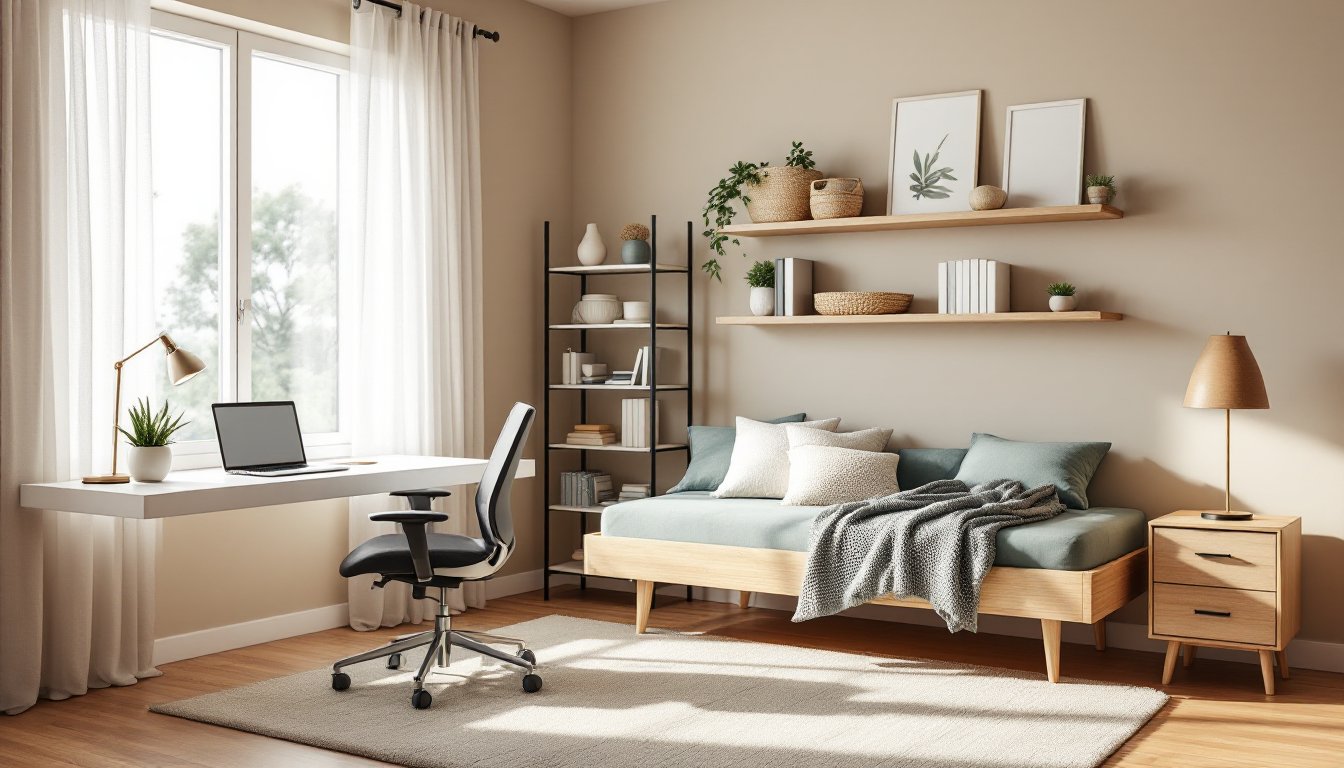
Converting a spare room into a guest room office combo solves two problems at once: creating workspace for remote work while maintaining a welcoming spot for overnight visitors. This dual-purpose approach maximizes square footage without forcing anyone to sacrifice functionality. The challenge lies in balancing professional productivity with guest comfort, but with thoughtful planning, the right furniture, and strategic storage, it’s entirely achievable. This guide walks through seven practical strategies to design a space that works equally well for focused work sessions and hosting friends or family.
Table of Contents
ToggleKey Takeaways
- A guest room office combo maximizes limited square footage by combining daily workspace with occasional guest accommodations, requiring at least 10×10 feet with clear zones for work, sleep, and circulation.
- Multifunctional furniture like Murphy beds, daybeds, and wall-mounted desks are essential to avoid constant rearranging while maintaining both productivity and guest comfort.
- Strategic storage solutions—floating shelves, closet systems, under-bed bins, and cable management—prevent clutter accumulation from office supplies, electronics, and guest essentials.
- Layered lighting with task, ambient, and accent fixtures serves dual purposes: supporting focused work during the day and creating a restful environment for overnight visitors.
- A cohesive design with neutral color palettes, textiles, and visual separation between zones makes the guest room office combo feel intentional rather than cramped or disorganized.
Why a Guest Room Office Combo Is the Perfect Solution for Modern Homes
The shift toward remote and hybrid work has redefined how homeowners use interior space. A dedicated home office increases productivity, but guest rooms often sit empty except for occasional visits. Combining these functions makes practical sense, especially in homes with limited square footage.
This setup delivers year-round value. The office portion gets daily use, while the guest sleeping area remains ready when needed. Unlike repurposing a dining room or hallway nook, a proper room with a door provides privacy for video calls and a quiet retreat for guests.
Zoning regulations and building codes rarely apply to cosmetic changes like furniture arrangement and decor. But, if plans include adding electrical outlets, moving walls, or upgrading HVAC, check local requirements. Most jurisdictions require permits for electrical work beyond simple fixture swaps, and homeowners should verify whether the room has adequate ventilation and egress (typically a window or secondary exit) to legally qualify as a sleeping space under IRC guidelines.
Essential Planning: Layout and Space Requirements
Start by measuring the room and mapping out zones. A functional guest room office combo typically needs at least 10 feet by 10 feet to accommodate both a work surface and a sleeping area without feeling cramped. Rooms smaller than this can still work but require more creative furniture choices.
Divide the space into distinct zones:
- Work zone: Allocate space for a desk (minimum 48 inches wide for a comfortable workspace), task chair, and accessible storage. Position this near a window for natural light or against a wall with existing outlets.
- Sleep zone: Plan for a bed (twin, full, or daybed), nightstand, and reading light. Leave at least 24 inches of clearance on the entry side of the bed for guest movement.
- Shared circulation: Maintain a 30-36 inch pathway between furniture pieces to meet accessibility standards and ensure comfortable movement.
Draw a scaled floor plan on graph paper (¼ inch = 1 foot works well) or use a free digital tool. Test furniture placement before purchasing anything. Consider door swing direction, window placement, and existing electrical outlets. Running extension cords across walkways creates trip hazards, plan the work zone where power is already accessible.
If the room has a closet, decide whether it serves guest clothing storage, office supplies, or a hybrid of both. Removing closet doors and installing a tension rod divider can split the space functionally without permanent modifications.
Choosing the Right Furniture for Dual Functionality
Furniture selection makes or breaks a dual-purpose room. Prioritize pieces that serve both functions without constant rearranging.
Sleeping options:
- Murphy bed (wall bed): Folds vertically into a cabinet when not in use, freeing floor space for the office setup. Quality hardware kits start around $1,000-$1,500, plus the cost of a mattress and installation. This works best in rooms at least 10 feet wide to accommodate the bed’s footprint when deployed.
- Daybed or sofa bed: Functions as seating during work hours and converts to a sleeping surface for guests. Modern sleeper sofas and daybeds have improved dramatically in comfort, look for models with a 5-inch or thicker memory foam mattress rather than thin futon-style pads.
- Standard bed with storage: A full or queen bed with built-in drawers underneath provides sleeping space and eliminates the need for a separate dresser. Pair it with a compact desk to maintain office functionality.
Desk options:
- Wall-mounted or floating desk: Saves floor space and can be positioned at any height. Ensure it’s anchored into wall studs (typically 16 inches on center) using appropriate brackets rated for at least 50 pounds per linear foot.
- Secretary desk or fold-down desk: Closes when not in use, creating a cleaner look for guests. Depth typically ranges from 12-18 inches when folded.
- Standard desk with dual purpose: Choose a desk that doubles as a vanity or side table for guests. A simple parsons-style desk (48-60 inches long) works in most layouts.
Seating:
Skip bulky executive chairs if space is tight. An ergonomic task chair with a smaller footprint or an attractive side chair that complements the room’s decor works better. If the daybed includes back cushions, it can serve as occasional seating for reading or video calls.
Storage Solutions That Maximize Space and Minimize Clutter
Dual-purpose rooms accumulate twice the stuff, office supplies, electronics, guest linens, and personal items. Without organized storage, the space quickly becomes chaotic.
Built-in and modular storage:
- Floating shelves: Install shelves 12-16 inches deep above the desk for books, binders, and decorative storage baskets. Anchor into studs with heavy-duty brackets.
- Closet systems: Replace a basic closet rod with an adjustable shelving system. Dedicate the upper half to office storage (printer, paper, files) and the lower half to a hanging rod and drawers for guest clothing.
- Under-bed storage: Use rolling bins or drawers to store seasonal items, extra bedding, or office archives. Measure the clearance height, most standard bed frames offer 10-14 inches of space.
Multifunctional pieces:
- Storage ottoman or bench: Provides seating and hides blankets, pillows, or office cables.
- Bookcase room divider: A freestanding shelving unit visually separates the work and sleep zones while offering display and storage on both sides.
Cable management:
Nothing looks worse than tangled cords snaking across the floor. Use cable raceways, velcro ties, or adhesive clips to route power and data cables along baseboards or desk legs. If drilling into walls, install a low-voltage mounting bracket to run cables cleanly between the desk and outlets.
Keep guest essentials, fresh linens, extra pillows, toiletries, in labeled bins or baskets that tuck into the closet or under the bed. This prevents last-minute scrambling when visitors arrive.
Design Tips for a Cohesive and Welcoming Aesthetic
A guest room office combo should feel intentional, not like a storage room with a bed shoved in the corner. Cohesive design ties both functions together.
Color palette:
Choose neutral or muted tones that promote both focus and relaxation. Soft grays, warm beiges, sage greens, or muted blues work well. Avoid overly stimulating colors like bright reds or oranges in a workspace meant to double as a sleep environment. One gallon of quality paint typically covers 350-400 square feet, so a standard 10×12 room (400 square feet of wall space accounting for openings) needs about one gallon per coat.
Textiles and layers:
Add warmth with a rug that defines the sleep zone and softens footsteps. An area rug should extend at least 18-24 inches beyond each side of the bed. Layer in curtains for light control, blackout or room-darkening panels help guests sleep and reduce screen glare during video calls.
Many small space design ideas emphasize using textiles to add personality without permanent changes. Swap pillows, throws, and artwork seasonally to keep the room feeling fresh.
Artwork and decor:
Hang artwork at eye level (57-60 inches from the floor to the center of the piece). Choose calming, non-distracting prints or photography. Avoid overcrowding walls, leave some breathing room.
Visual separation:
Even without a physical divider, create distinction between zones. Position the desk perpendicular to the bed rather than directly facing it. Use a bookcase, folding screen, or tall plant to suggest separation without blocking light or making the room feel smaller.
Technology and Lighting Considerations for Work and Rest
Lighting makes or breaks dual functionality. The same space needs bright, focused light for work and soft, ambient light for guest comfort.
Layered lighting plan:
- Task lighting: A desk lamp with adjustable brightness and color temperature (look for models offering 3000K-5000K range) supports focused work without harsh overhead glare.
- Ambient lighting: A ceiling fixture or floor lamp provides general illumination. Install a dimmer switch (requires basic electrical knowledge or a licensed electrician if not comfortable working with wiring) to adjust brightness for different times of day.
- Accent or reading light: A bedside lamp or wall-mounted sconce gives guests control over their lighting needs.
Electrical capacity:
Home offices demand more power than typical bedrooms. A computer, monitor, printer, phone charger, and desk lamp can easily draw 10-15 amps combined. Most bedroom circuits are 15-amp circuits under NEC guidelines. If the room’s existing outlets feel maxed out (lights dim when equipment powers on, or breakers trip), consult a licensed electrician about adding a dedicated circuit. Running a new circuit requires a permit in most jurisdictions.
Technology setup:
- Wi-Fi coverage: Ensure strong signal strength in the room. If connectivity is weak, consider a mesh network extender.
- Charging stations: Install USB outlets or a charging dock on the nightstand so guests can power devices without hunting for adapters.
- Privacy and noise control: If the office hosts frequent video calls, add a white noise machine or sound-dampening curtains. Solid-core doors reduce sound transmission better than hollow-core doors (a simple upgrade that requires only swapping hinges if the frame size matches).
Current interior design trends favor smart lighting systems that adjust color temperature throughout the day, but basic dimmable LEDs deliver most of the benefit at a fraction of the cost. Choose LED bulbs rated for at least 800 lumens (equivalent to a 60-watt incandescent) for general lighting and 400-500 lumens for task or accent fixtures.
Conclusion
Designing a guest room office combo requires balancing function, comfort, and aesthetics, but it’s entirely doable with intentional planning. Measure carefully, choose multifunctional furniture, invest in smart storage, and layer lighting to serve both work and rest. The result is a flexible space that earns its square footage every single day, whether hosting a deadline or an overnight guest.