
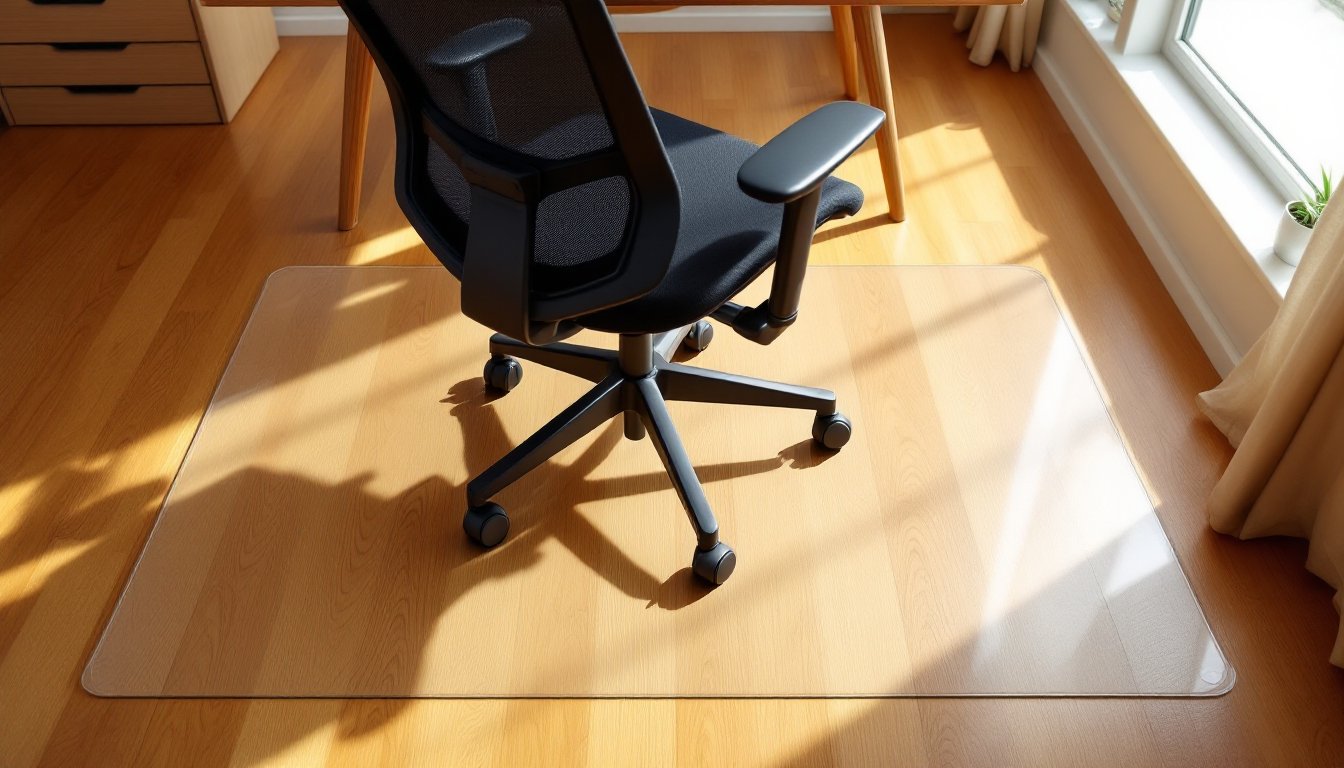
Rolling office chairs are hard on floors. Whether you’re working from home or outfitting a home office, unprotected hardwood, laminate, or carpet takes a beating from constant movement, caster wheels, and concentrated weight. An office chair rug, sometimes called a chair mat, solves this problem while keeping your workspace functional and looking sharp. It’s not glamorous, but it’s one of those small upgrades that pays off every single day. This guide covers what makes a good chair rug, how to pick the right material and size, and how to install it properly so it actually does its job.
Table of Contents
ToggleKey Takeaways
- An office chair rug protects hardwood, laminate, and carpet from damage caused by rolling casters and concentrated weight, preventing costly flooring repairs that can cost hundreds to thousands of dollars.
- Choose the right office chair rug material based on your flooring: polycarbonate or tempered glass for hard surfaces, and cleated PVC or polycarbonate for carpet to prevent shifting and ensure smooth rolling.
- Proper sizing (typically 36″ × 48″ to 48″ × 60″) and positioning with 2 inches of mat extending beyond your chair’s maximum roll radius ensures effective floor protection and smooth movement.
- Weekly sweeping and monthly deep cleaning, along with upgrading to soft polyurethane wheels, significantly extends your chair rug’s lifespan from 3–7 years and maintains optimal performance.
- Avoid PVC mats on hardwood unless labeled non-staining, and keep the mat away from heat sources above 140°F to prevent warping and discoloration over time.
What Is an Office Chair Rug and Why You Need One
An office chair rug is a protective mat placed under a desk chair to prevent damage from rolling casters and static weight. They’re typically made from polycarbonate, PVC, tempered glass, or woven polypropylene, depending on the flooring type beneath them.
Here’s why they’re worth installing:
• Floor protection: Caster wheels grind dirt and grit into finishes, leaving scratches, scuffs, and worn-down tracks in hardwood, vinyl, and laminate. Carpets compress and pill under repeated rolling.
• Smoother rolling: A hard, flat surface lets your chair glide with less effort than carpet pile or uneven wood grain. This reduces strain on your back and legs during the workday.
• Static control: Some mats include anti-static properties to reduce shocks in low-humidity environments, especially helpful around electronics.
• Noise reduction: Rolling across a mat is quieter than casters scraping hardwood or grinding into carpet backing.
Without protection, you’ll see visible damage within months of regular use. Hardwood floors develop permanent indentations and finish wear. Carpets mat down in high-traffic zones and fray around the edges. Replacing flooring costs hundreds to thousands of dollars depending on material and room size. A quality chair mat runs $30 to $200 and lasts years if maintained properly.
Types of Office Chair Rugs: Materials and Styles Compared
Not all chair mats work on all floors. The material beneath your desk determines which type you need.
Hard Surface Chair Mats vs. Carpet Protectors
For hardwood, laminate, tile, and vinyl:
Use mats with soft, smooth backing, usually a felt or cork underlayer. Polycarbonate and tempered glass are the best materials here. Polycarbonate mats are lightweight, crystal-clear, and handle chairs up to 1,000 pounds without cracking. They’re also flexible enough to lay flat on slightly uneven surfaces. Tempered glass mats look sleeker and resist yellowing, but they’re heavier (15–25 pounds) and cost more, expect to pay $150–$250 for a standard 36″ × 48″ size. Both materials resist scratches better than cheaper PVC options.
Avoid PVC mats on hardwood unless they’re explicitly labeled “non-slip” and “non-staining.” Some PVC formulations cause discoloration or leave residue on finished floors, especially in warm climates. While exploring budget-friendly office furniture setups, many DIYers have learned this the hard way.
For low-pile and plush carpet:
You need a mat with cleats or grippers on the underside to anchor into carpet fibers and prevent shifting. PVC and polycarbonate both work, but look for models rated for your carpet thickness. Low-pile (like commercial loop) requires shorter cleats, around 1/8″. Medium to plush pile needs cleats up to 3/8″ to grab properly.
Polypropylene woven mats are another option for carpet. They’re thinner, more flexible, and cheaper ($30–$60), but they don’t roll as smoothly as rigid plastic. They work best in low-traffic home offices where you’re not moving constantly.
Specialty options:
• Bamboo chair mats: Eco-friendly, attractive, and naturally antimicrobial. They work on hard floors and low-pile carpet. Expect to pay $70–$120. They’re heavier than plastic and can splinter at the edges if not finished properly.
• Anti-fatigue mats: Cushioned mats designed for standing desks. Not ideal for rolling chairs, they compress unevenly and make movement sluggish.
Always check the weight capacity before buying. Standard mats handle 250–400 pounds (chair plus person). Heavy-duty models go up to 1,000 pounds, necessary for executive chairs or bariatric seating.
Choosing the Right Size and Shape for Your Workspace
Measure your work zone before ordering. A mat that’s too small forces you to roll off the edge constantly: too large and it dominates the room visually.
Standard sizes:
• 36″ × 48″: Fits compact desks and tight corners. Good for apartments or small home offices.
• 45″ × 53″: Most common size. Covers a typical desk footprint with room to roll left and right.
• 48″ × 60″ or larger: For L-shaped desks, dual monitors, or wide work surfaces.
Measure from the back of your chair’s resting position to the farthest point you roll forward, then add 6–12 inches in each direction. If you swivel between a desk and credenza, account for that arc.
Shape options:
• Rectangular: Works under most desks. Simple to position and replace.
• T-shaped or L-shaped: Designed for corner desks or workstations with extended side surfaces. These cost 20–30% more but eliminate seams if you’d otherwise need two mats.
• Contoured (lip extension): Includes a smaller extended section that tucks under the desk, protecting the area where your feet rest. Useful if you tend to scuff the floor with your shoes.
If your desk sits on area rug over hardwood, size the mat to stay within the rug boundaries. Rolling off a hard mat onto soft carpet feels jarring and wears down the rug edge. Many interior design projects layer textures intentionally, but abrupt transitions under a work chair usually backfire.
Thickness matters:
Mats range from 1/8″ to 1/4″ thick. Thicker isn’t always better. On hard floors, 1/8″ is plenty and lies flatter. On carpet, match thickness to pile height, thicker mats bridge deeper pile and prevent sinking.
How to Install and Position Your Office Chair Rug
Most chair mats require no tools, but proper installation prevents curling, slipping, and premature wear.
Step-by-step for hard floors:
-
Clean the floor thoroughly. Sweep and damp-mop to remove dust, grit, and oils. Let dry completely. Debris trapped under the mat can scratch the finish over time.
-
Unroll or unpack the mat. If it arrives rolled, lay it flat in a warm room for 24–48 hours to relax. Some polycarbonate mats ship flat: others need acclimation.
-
Position the mat. Center it under your chair’s resting position. The lip (if present) should extend under the desk where your feet sit.
-
Press down firmly. Work from the center outward to eliminate air pockets. For mats with adhesive backing, peel the protective film as you press.
-
Check for slippage. Sit and roll in all directions. If the mat slides, add rubber corner grips or a thin rug pad cut to size underneath (not between the mat and floor, which voids most warranties).
Step-by-step for carpet:
-
Vacuum the carpet. Remove surface dirt and loose fibers. Let the pile spring back up before placing the mat.
-
Acclimate the mat as above.
-
Press cleats into carpet. Flip the mat cleat-side down and position it. Step firmly along all edges and the center to embed the grippers. You should feel resistance as the cleats bite.
-
Test stability. Roll your chair across the mat. It shouldn’t shift. If it does, the cleats are too short for your carpet pile or the mat is undersized.
Positioning tips:
• Leave at least 2 inches of mat extending beyond the chair’s maximum roll radius in all directions.
• Avoid placing mats over heating vents or in direct sunlight near windows. Heat causes warping in PVC and can discolor polycarbonate over time.
• If stacking a mat on top of an area rug, use a low-profile polycarbonate mat with smooth backing. Cleated mats will shred the rug fibers.
For glass mats weighing over 20 pounds, get help lifting and positioning. Dropping one can chip the edges or crack the surface. Wear work gloves to protect your hands from sharp corners during setup.
Maintenance Tips to Extend Your Chair Rug’s Lifespan
A chair mat is low-maintenance, but regular care prevents cracking, discoloration, and edge damage.
Weekly cleaning:
• Sweep or vacuum to remove dirt and debris. Grit acts like sandpaper between the mat and floor.
• Wipe with a damp microfiber cloth and mild dish soap if needed. Avoid ammonia-based cleaners on polycarbonate, they cause clouding.
Monthly deep clean:
• Lift the mat and clean the underside and the floor beneath it. Dust and pet hair accumulate in this space.
• Inspect for cracks, chips, or curling edges. Small cracks in polycarbonate can be sanded lightly with 220-grit sandpaper to prevent snagging chair wheels.
Protection strategies:
• Replace worn casters. Hard plastic wheels chew through mats faster than soft polyurethane wheels. If your chair came with cheap casters, upgrade to rollerblade-style wheels (around $20–$30 for a set of five). They distribute weight better and glide smoothly on both mats and hard floors. Resources like The Spruce often highlight these small upgrades in office organization guides.
• Avoid dragging heavy items across the mat. Move filing cabinets, space heaters, or boxes separately.
• Flip or rotate the mat every 6–12 months if it’s reversible. This evens out wear patterns.
• Keep the mat away from heat sources. PVC and polycarbonate warp above 140°F. Don’t place space heaters directly on or under the mat.
Dealing with curling edges:
If corners start lifting, especially in dry climates, place the mat in direct sunlight or a warm room for 30 minutes, then weigh down the edges with books or weights overnight. For stubborn curls, use double-sided carpet tape on hard floors or rug corner grippers on carpet.
When to replace:
Mats typically last 3–7 years depending on material and use intensity. Replace when:
• Cracks extend more than 2 inches
• The surface becomes deeply scratched or pitted, causing rough rolling
• Edges crack and create tripping hazards
• Discoloration or warping affects function
Recycle old polycarbonate and PVC mats where accepted (#7 plastic). Some manufacturers offer take-back programs.
Conclusion
An office chair rug is one of those unsexy upgrades that makes daily life better without you noticing, until you work somewhere without one. Match the material to your flooring, size it generously, and keep the surface clean. Your floors will last longer, your chair will roll smoother, and you’ll avoid the expense of refinishing hardwood or replacing matted carpet down the line. It’s a small fix with a long payoff.