
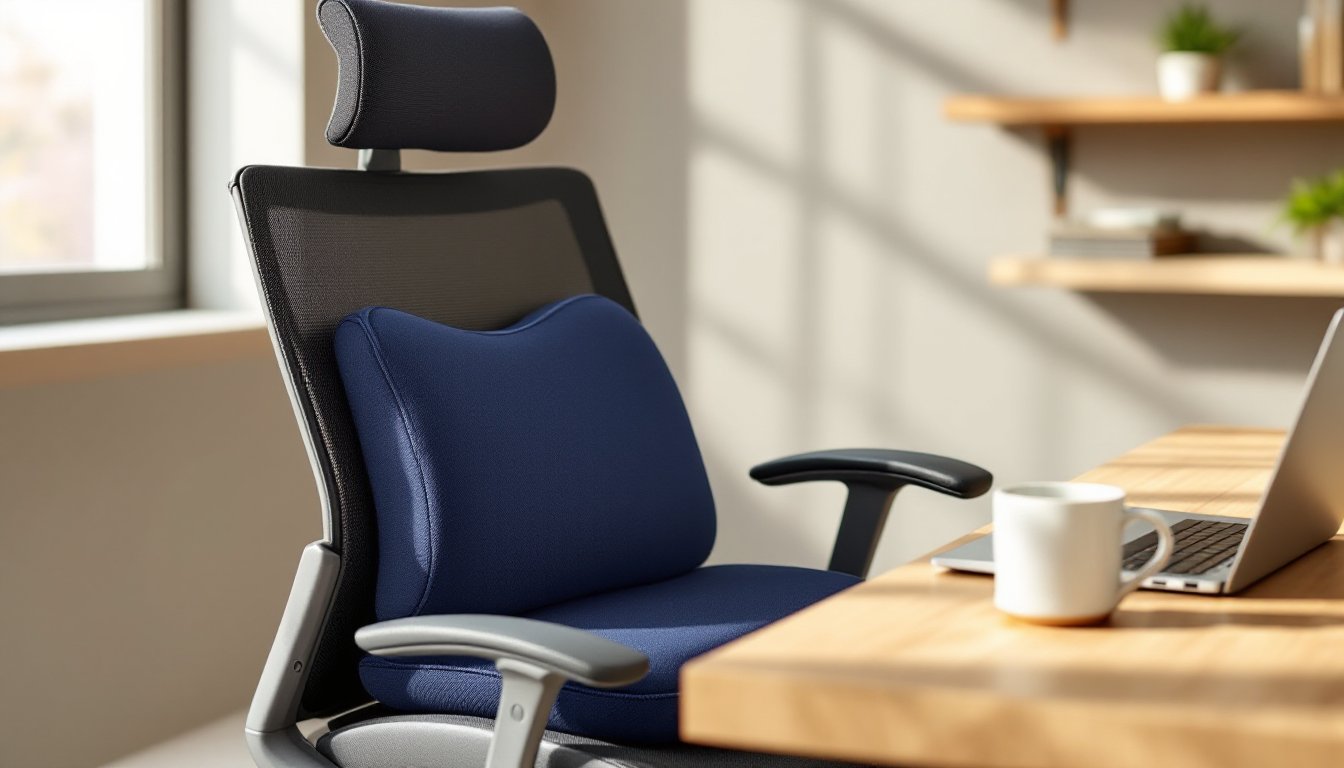
Spending eight hours a day in an office chair that wasn’t quite designed for your body is a recipe for lower back pain, neck stiffness, and overall discomfort. Most standard office chairs, even the pricier models, come with generic padding and minimal lumbar contouring that fails to accommodate individual spines and sitting habits. Adding a well-chosen pillow to an office chair can transform an uncomfortable workstation into an ergonomic setup that supports proper posture throughout the day. Whether dealing with chronic back issues or simply looking to upgrade comfort without replacing an entire chair, office chair pillows offer an accessible, budget-friendly solution that addresses specific pressure points and alignment needs.
Table of Contents
ToggleKey Takeaways
- An office chair pillow transforms generic seating into ergonomic support by addressing the gap between standard chair design and individual spinal needs, improving both comfort and productivity.
- Lumbar pillows maintain the spine’s natural S-curve at the lower back, while seat cushions reduce pressure on the tailbone and sit bones—many people benefit from using both types simultaneously.
- Memory foam, gel, and inflatable office chair pillow options each offer distinct advantages: memory foam for contouring, gel for heat management, and inflatable designs for adjustable portability.
- Custom DIY office chair pillows can be built for $10–$25 in materials within 1–2 hours, giving you full control over firmness, size, and fabric while maintaining budget-friendly comfort improvements.
- Proper placement at the belt line with a 100–110 degree chair recline, weekly vacuuming, and monthly cover washing ensure an office chair pillow delivers long-term support and durability.
- Replace office chair pillows every 1–3 years when foam no longer rebounds quickly after compression, as flattened cushions provide inadequate support and can worsen posture.
Why Your Office Chair Needs a Pillow
Standard office chairs typically feature flat or minimally contoured seats and backrests that don’t account for the natural S-curve of the human spine. This design gap forces the lower back into an unnatural position, causing the lumbar vertebrae to bear uneven loads during prolonged sitting. Over time, this misalignment contributes to muscle fatigue, disc compression, and chronic pain.
Office chair pillows address these issues by filling the gap between the chair’s generic shape and an individual’s body. A lumbar pillow nestled in the small of the back maintains the spine’s natural curve, distributing weight more evenly across the vertebrae. Seat cushions reduce pressure on the tailbone and sit bones (ischial tuberosities), improving circulation to the legs and reducing numbness.
Beyond pain relief, proper support enhances focus and productivity. Studies show that discomfort directly correlates with decreased concentration and increased break frequency. A $30 pillow can deliver benefits comparable to chairs costing hundreds more, without the commitment or expense of a full furniture replacement.
Ergonomic pillows also accommodate bodies that don’t fit the “standard” mold assumed by chair manufacturers. Shorter individuals often can’t reach the built-in lumbar support: taller people find backrests hit mid-shoulder instead of upper back. Adjustable pillows compensate for these mismatches, making any chair more adaptable.
Types of Office Chair Pillows and Their Benefits
Lumbar Support Pillows
Lumbar pillows target the lower back’s inward curve (lordosis), where most sitting-related pain originates. These pillows typically measure 12-14 inches wide and 4-6 inches thick, designed to wedge between the chair back and the lumbar region.
Memory foam versions contour to individual spines and retain shape over time, though they can trap heat during long sessions. Look for models with gel-infused foam or breathable mesh covers if temperature is a concern. Foam density matters, higher-density foam (4+ lbs per cubic foot) provides firmer, longer-lasting support but feels less plush initially.
Inflatable lumbar pillows offer adjustability: users can add or release air to fine-tune firmness and depth. They’re portable and packable, ideal for frequent travelers, but require occasional re-inflation and are more prone to punctures than solid foam.
Some lumbar pillows include adjustable straps that secure to chair backs, preventing the pillow from sliding down during movement. Elastic straps work on most chairs, while clip-on designs fit chairs with mesh or slatted backs. For those working on step-by-step DIY project tutorials, a lumbar pillow with removable, washable covers proves practical when dust and debris accumulate.
Seat Cushions
Seat cushions redistribute weight away from pressure points, particularly the tailbone (coccyx) and sit bones. Standard designs include:
Wedge cushions slope 3-5 degrees from back to front, tilting the pelvis forward to encourage upright posture and reduce lumbar strain. They’re particularly helpful for individuals who tend to slouch. Typical dimensions are 16 x 16 x 2-4 inches, fitting most standard office chairs.
Coccyx cushions feature a U-shaped or V-shaped cutout at the rear, suspending the tailbone above the seat surface. This design eliminates direct pressure on the coccyx, essential for anyone recovering from tailbone injuries or experiencing sciatica. The cutout typically measures 3-4 inches deep.
Gel cushions use polymer gel grids that distribute weight across a larger surface area, mimicking the pressure-relief properties of more expensive medical-grade seating. They stay cooler than memory foam but tend to be heavier and less portable.
Donut cushions (ring-shaped) relieve pressure on the entire pelvic floor, not just the tailbone. They’re commonly recommended post-surgery or for hemorrhoid relief, though the center hole can feel unstable during typing or leaning.
Most seat cushions include non-slip bottoms, either rubberized backing or grippy fabric, to prevent sliding on leather or mesh chairs. Covers should be removable and machine-washable: office chairs accumulate skin oils, dust, and spills quickly.
How to Choose the Right Office Chair Pillow for Your Needs
Start by identifying the primary discomfort. Lower back pain at the belt line points toward a lumbar pillow. Tailbone or hip soreness suggests a seat cushion. Many people benefit from using both simultaneously.
Measure the chair before purchasing. Seat cushions should fit within the chair’s seat pan, leaving 1-2 inches of clearance on all sides to avoid overhang. Check seat pan depth (front to back), most measure 16-18 inches, but task chairs and gaming chairs can run deeper. Lumbar pillows need to align with the lower back when sitting: test that the chair’s backrest height accommodates the pillow without pushing it into the mid-back.
Consider material density and firmness. Soft pillows feel comfortable initially but compress quickly, losing support within months. Medium-firm to firm options (3-5 lbs per cubic foot for memory foam) maintain structure longer, though they require a break-in period. If choosing gel, verify the grid thickness, thinner grids (under 1.5 inches) bottom out under heavier body weights.
Breathability matters for all-day use. Mesh covers, perforated foam, or gel-infused materials reduce heat buildup. Avoid vinyl or non-breathable synthetic covers unless the pillow will only be used for short periods.
Check strap and attachment systems if the chair has a high back or reclines frequently. Straps should be adjustable to at least 20 inches to fit wider executive chairs. For chairs with open backs or mesh, look for clip or hook attachments instead of elastic loops.
Portability is a factor for hybrid workers. Inflatable or folding pillows pack into laptop bags: memory foam versions weigh 1-3 lbs and require dedicated carrying space.
Be realistic about maintenance. Removable, machine-washable covers are non-negotiable for long-term use. Spot-clean-only pillows develop odors and stains quickly in daily office environments.
DIY Office Chair Pillow Solutions for Budget-Conscious Homeowners
Building a custom office chair pillow costs $10-$25 in materials and takes 1-2 hours, offering full control over size, firmness, and fabric.
Materials needed:
- High-density foam (2-4 inches thick, available at fabric or upholstery stores in sheets)
- Fabric (canvas, denim, or upholstery-weight cotton, 1/2 to 3/4 yard)
- Zipper (14-18 inches, optional but recommended for washability)
- Thread (heavy-duty polyester)
- Velcro strips or elastic straps (for attachment)
Tools:
- Electric carving knife or serrated bread knife (for cutting foam)
- Sewing machine (a straight stitch is sufficient: hand-sewing works but takes longer)
- Fabric scissors
- Measuring tape
- Straight pins
Steps:
-
Measure and cut foam. For a lumbar pillow, cut foam to 12 x 14 x 3 inches. For a seat cushion, measure the chair’s seat pan and cut foam 1 inch smaller on each side to allow fabric clearance. Use an electric carving knife for clean cuts, foam compresses under regular blades, creating uneven edges.
-
Sew the cover. Cut fabric pieces 1 inch larger than foam dimensions on all sides (seam allowance). If adding a zipper, insert it along one edge before sewing the perimeter. Pin fabric right-sides together, sew three sides with a 1/2-inch seam allowance, then sew the fourth side (leaving zipper open if included). Turn right-side out.
-
Insert foam. Compress foam slightly to slide it into the cover. Memory foam from old mattress toppers works well and costs nothing if already on hand. Avoid loose stuffing (polyester fiberfill), it shifts and clumps, losing support quickly.
-
Add attachment straps. Sew 2-inch-wide elastic straps to the back of lumbar pillows, positioning them 4-6 inches from top and bottom edges. For seat cushions, attach Velcro strips to the underside, matching them to corresponding strips sewn onto the chair fabric (test removability first to avoid permanent adhesive damage). Those interested in budget home makeovers often appreciate custom fabric choices that coordinate with office decor.
Alternative quick fix: Repurpose a standard bed pillow by rolling and securing it with duct tape or fabric ties to create a makeshift lumbar support. This works temporarily but lacks the firmness of purpose-built foam. For seat cushions, fold a thick moving blanket or yoga mat to the desired thickness and wrap it in an old pillowcase. Not elegant, but functional for testing whether a cushion helps before investing in materials.
Another approach involves modifying existing cushions. Cut open an inexpensive throw pillow, remove half the stuffing to reduce loft, and replace it with a piece of firm foam cut to size. This hybrid approach combines the soft outer feel of polyester fill with the core support of foam.
For those experienced with home crafting projects, adding design elements like piping, contrast stitching, or quilted covers elevates a functional item into office decor.
Proper Placement and Usage Tips
Lumbar pillow placement: Position the pillow’s thickest part at the belt line, roughly where the lumbar vertebrae (L3-L5) naturally curve inward. If it sits too high (mid-back), it pushes the shoulders forward: too low (near the tailbone), it fails to support the curve. When seated, there should be no gap between the lower back and the pillow, if space remains, the pillow is either too thin or positioned incorrectly.
Adjust chair recline to maintain contact. Most ergonomic guidelines recommend a 100-110 degree recline (slightly past vertical) to reduce lumbar disc pressure. The pillow should follow this angle, not force an upright 90-degree posture that strains the back.
Seat cushion placement: Center the cushion on the seat pan with the thicker edge toward the back (for wedge cushions). The front edge should end 2-3 inches from the seat’s front to avoid pressure on the backs of the knees, which restricts circulation. For coccyx cushions, align the cutout directly under the tailbone, shifting it forward or back defeats the purpose.
Feet should rest flat on the floor (or on a footrest) with knees bent at 90 degrees when sitting on a cushion. Adding 2-4 inches of height may require raising the desk or lowering the chair to maintain proper arm and wrist position at the keyboard.
Safety note: Cushions that raise seat height significantly can make chairs tippy, especially swivel chairs with five-point bases. If the seat feels unstable, the cushion is too thick for that chair model.
Break-in period: Firm foam cushions require 5-10 days of use to soften slightly and conform to body shape. Initial discomfort doesn’t always indicate a bad fit, give new pillows a week before judging effectiveness.
Maintenance: Vacuum covers weekly to remove dust and debris. Wash removable covers monthly in cold water and air-dry to prevent shrinkage. Foam itself should never be submerged, spot-clean with a damp cloth and mild detergent, then air-dry completely to prevent mold.
Replace pillows when foam no longer rebounds quickly after compression (typically 1-3 years depending on quality and use). Flattened cushions provide no support and can worsen posture by creating a false sense of comfort.