
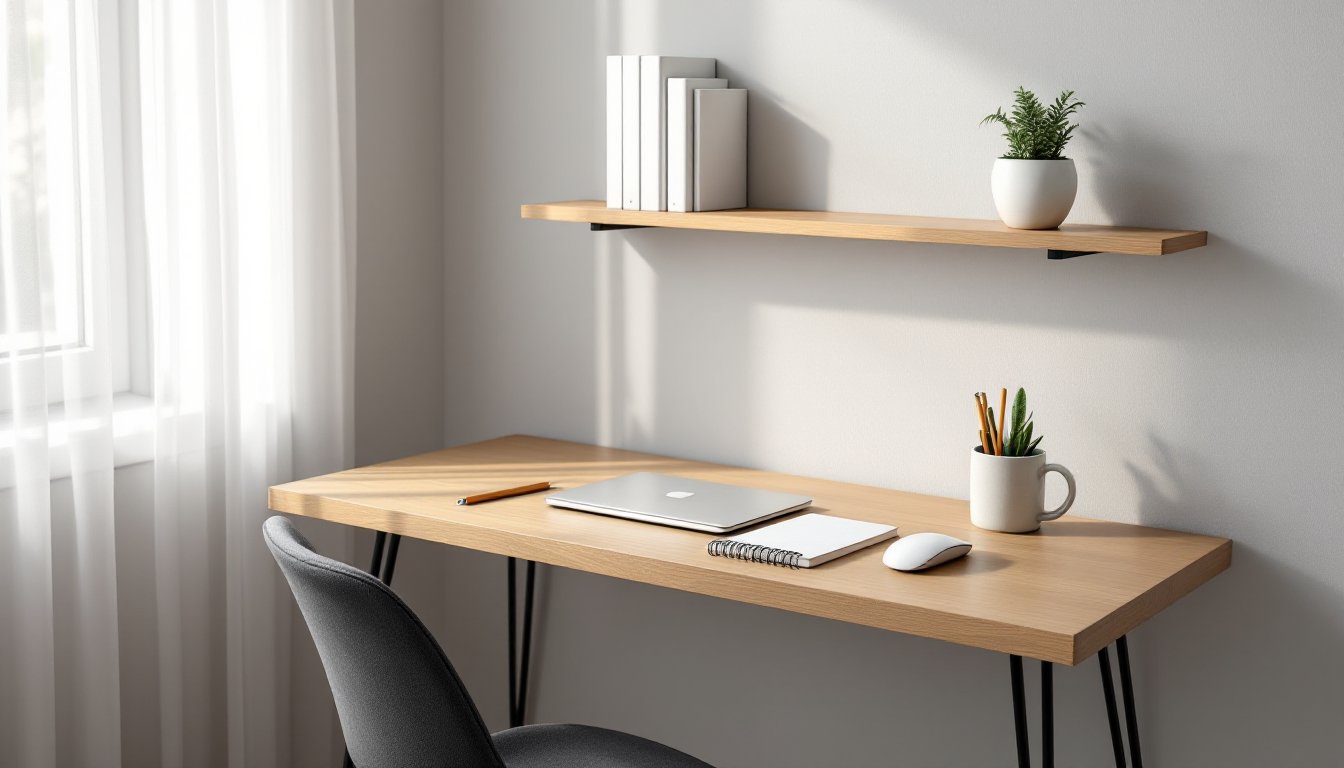
Finding room for a productive workspace doesn’t require a dedicated office. A small desk can transform an underused corner, a bedroom alcove, or even a narrow hallway into a functional home office, without sacrificing living space. Whether someone’s working remotely full-time or just needs a spot to pay bills and check email, the right compact desk setup delivers efficiency and style. The trick is matching desk size and configuration to the actual footprint available, then building storage and workflow around it.
Table of Contents
ToggleKey Takeaways
- A small desk transforms underutilized spaces like bedroom alcoves and hallways into functional home offices while preserving living area and costing $100–$400 for quality options.
- Wall-mounted, corner, and L-shaped small desk configurations maximize unused space and maintain ergonomic standards of 28–30 inches in height with proper chair and monitor arm support.
- Vertical storage solutions like floating shelves, pegboards, and rolling carts prevent clutter and compensate for the limited surface area of compact workstations.
- DIY small desk builds using plank-and-bracket, sawhorse, or modified door designs offer customizable dimensions and styling at minimal cost with basic tools.
- Proper cable management through rear cutouts, adhesive clips, and cable baskets keeps a small desk organized and ensures equipment weight capacity of at least 75 pounds.
Why a Small Desk Is the Smart Choice for Your Home Office
Small desks (typically 36–48 inches wide) offer flexibility that full-size executive desks can’t match. They fit into tight spaces, think alongside a bed, under a stairwell, or tucked into a closet, and leave room for foot traffic and furniture.
Compact footprints also force intentional organization. With less surface area, there’s built-in motivation to keep clutter minimal and workflow streamlined. A small desk encourages users to define what tools and materials they truly need within arm’s reach, rather than letting paperwork expand to fill available space.
From a cost perspective, small desks run $100–$400 for solid options in wood, metal, or laminate, significantly less than larger units. For renters or anyone who moves frequently, they’re easier to transport and reconfigure. And in multi-use rooms (bedrooms, living rooms, kitchens), a smaller desk blends into the decor without dominating the space or screaming “office.”
Finally, small desks suit ergonomic needs just as well as larger models. Standard desk height is 28–30 inches, and most compact designs adhere to that range. Pair one with an adjustable chair and a monitor arm, and the workspace is as comfortable as any corporate cubicle, just more adaptable.
Types of Small Desks That Fit Any Space
Choosing the right style depends on available wall space, floor plan, and how the desk will be used daily. Here are the most versatile configurations for tight quarters.
Wall-Mounted and Floating Desks
Wall-mounted desks attach directly to studs and take up zero floor space. They’re ideal for narrow hallways, closets, or bedrooms where every square foot counts. Most fold up when not in use, making them perfect for guest rooms or multipurpose areas.
Typical floating desk depth ranges from 12 to 18 inches, enough for a laptop, notebook, and small accessories. Installation requires locating studs (use a stud finder) and mounting heavy-duty brackets rated for at least 50 pounds to support the desktop and any equipment. Many homeowners integrate these into DIY furniture projects to match existing trim or cabinetry.
Look for models with integrated cable management or a small shelf underneath for a keyboard tray. These desks won’t accommodate dual monitors or bulky peripherals, but they excel as minimalist workstations for writing, email, and video calls.
Corner Desks and L-Shaped Solutions
Corner desks capitalize on unused angles in a room, turning dead space into productive square footage. An L-shaped configuration provides two work surfaces, one for a computer, the other for paperwork or a printer, while maintaining a compact overall footprint.
Most corner desks measure 48 x 48 inches or smaller per side, fitting snugly into room corners without blocking windows or doorways. They’re particularly effective in bedrooms or basements where traditional rectangular desks would interrupt traffic flow.
When selecting a corner unit, confirm that both sides offer adequate leg clearance (at least 24 inches deep under the work surface). Some budget models skimp on support, leading to wobble or sag. Solid wood or metal frames are worth the investment for daily use. For tight spaces, consider a three-quarter corner desk that uses only one wall and extends at an angle, still efficient, but easier to access from multiple directions.
How to Choose the Right Small Desk for Your Needs
Start by measuring the available footprint, not just width, but depth and vertical clearance if the desk will sit under a shelf or window. Standard desk depth is 24–30 inches: anything less than 20 inches may feel cramped for tasks beyond laptop work.
Next, consider the primary use case:
- Writing and admin tasks: A simple rectangular or wall-mounted desk with a single drawer works. Surface area of 36 x 20 inches is plenty.
- Computer work with peripherals: Look for a desk at least 42 inches wide to accommodate a monitor, keyboard, mouse, and a notepad. A grommeted hole or rear cutout for cable routing prevents tangled cords.
- Creative work (design, crafts, drawing): Opt for deeper surfaces (28–30 inches) and consider an adjustable-height model to alternate between sitting and standing.
Material matters for durability and aesthetics. Solid wood (oak, maple, birch) handles daily wear and supports heavy equipment, but adds cost and weight. Engineered wood (plywood, MDF with laminate or veneer) is lighter and budget-friendly, though less resistant to scratches and moisture. Metal frames with wood or glass tops offer a modern look and excellent stability, great for industrial or minimalist interiors.
Don’t forget weight capacity. A laptop and a couple of books might total 15 pounds, but add a desktop computer, printer, and books, and the load climbs to 40+ pounds. Check manufacturer specs and aim for desks rated at least 75 pounds to avoid sagging or collapse.
Finally, think about assembly and portability. Many small desks ship flat-pack and require basic tools (Phillips screwdriver, Allen wrenches). If moving or rearranging is likely, lightweight designs with knock-down hardware make life easier.
Smart Storage Solutions for Compact Workspaces
Limited surface area means storage has to go vertical or get creative. A small desk without built-in drawers or shelves quickly becomes cluttered, so plan for supplementary organization from day one.
Floating shelves installed directly above the desk keep reference books, binders, and supplies within reach without eating into work surface. Mount them 12–18 inches above the desktop to avoid head bumps. Use wall anchors rated for the shelf material and load: a single shelf holding textbooks can weigh 20+ pounds.
Pegboard panels offer modular storage for tools, headphones, charging cables, and small bins. Install a pegboard backing to the wall behind the desk (or to the side if wall space is tight), then rearrange hooks and accessories as needs change. Paint it to match the room, or leave it natural for an industrial vibe.
Rolling carts (like kitchen utility carts) slide under or beside a small desk and hold office supplies, files, or a printer. Look for models 15–18 inches wide so they tuck neatly out of the way. Locking casters prevent unwanted movement.
Desktop organizers and drawer inserts corral pens, paper clips, sticky notes, and charging cables. A simple bamboo tray or acrylic divider set keeps the surface tidy and makes it easier to find what’s needed mid-task.
For those dealing with paperwork, a wall-mounted file holder or a vertical letter tray keeps documents sorted without sprawling across the desk. Magazine holders (the cardboard or metal kind) work well for sorting pending bills, catalogs, or project folders.
If the desk is in a closet or alcove, consider adding a tension rod near the top to hang a small curtain or fabric panel, instant “door” to hide clutter at the end of the workday. Many apartment dwellers use this trick to maintain clean sightlines in small space living ideas without permanent construction.
DIY Ideas to Customize Your Small Desk Setup
Building or modifying a small desk is well within reach for DIYers with basic carpentry skills. Custom builds ensure exact dimensions and a style that fits the room.
Simple Plank-and-Bracket Desk
Use a 1 x 12-inch or 1 x 10-inch board (actual dimensions: ¾ x 11¼ inches or ¾ x 9¼ inches) cut to the desired length, 36 to 48 inches works for most spaces. Sand it smooth (120-grit, then 220-grit), and apply primer followed by two coats of satin or semi-gloss paint, or use a clear polyurethane finish for natural wood.
Mount two heavy-duty shelf brackets to wall studs, spaced to support the board evenly. Install brackets 16 inches apart if possible (standard stud spacing), and confirm they’re level with a 24-inch spirit level. Set the board on top, and secure it with screws from below if desired, or let it rest unattached for easy removal.
Safety note: Always wear safety goggles when cutting or sanding wood, and use a dust mask if working with MDF or treated lumber.
Sawhorse or Trestle Desk
Pair two folding sawhorses or simple trestle legs with a solid-core door, butcher-block countertop, or sheet of ¾-inch plywood. This setup is height-adjustable (most sawhorses range from 26 to 32 inches), portable, and costs under $100 in materials.
Cut the top to size with a circular saw (a straightedge guide ensures clean cuts), then sand edges and apply finish. No fasteners required, gravity holds it together. For a cleaner look, paint or stain the legs to match the top.
Cable Management and Rear Cutouts
Drill a 1½- to 2-inch hole near the back edge of the desktop using a spade bit or hole saw. Thread power cables, USB cords, and monitor cables through it to keep them off the work surface. Add a plastic grommet (available at hardware stores) for a finished edge.
Under the desk, use adhesive cable clips or a wire basket (like the IKEA SIGNUM) to route cords along the underside or down a leg. This prevents tangling and makes it easier to plug and unplug devices.
Desktop Risers and Monitor Arms
If the desk is lower than ideal, build simple risers from scrap 2×4 lumber. Cut four blocks to the same height (2, 3, or 4 inches), sand them, and set one under each desk leg. Finish with stain or paint to match.
For better ergonomics, mount the monitor on a clamp-style monitor arm. This frees up desk space and lets the user adjust screen height and angle without stacking books under the display. Most arms clamp to desktops ¾ to 2 inches thick and support monitors up to 20 pounds.
Those looking for more detailed tutorials on painting techniques or budget renovation ideas will find step-by-step walkthroughs and material recommendations that pair well with these basic builds.
Tool note: A miter saw gives cleaner angle cuts for legs or trim, but a circular saw with a guide works fine for straight cuts. Always clamp workpieces securely and keep hands clear of the blade path.