
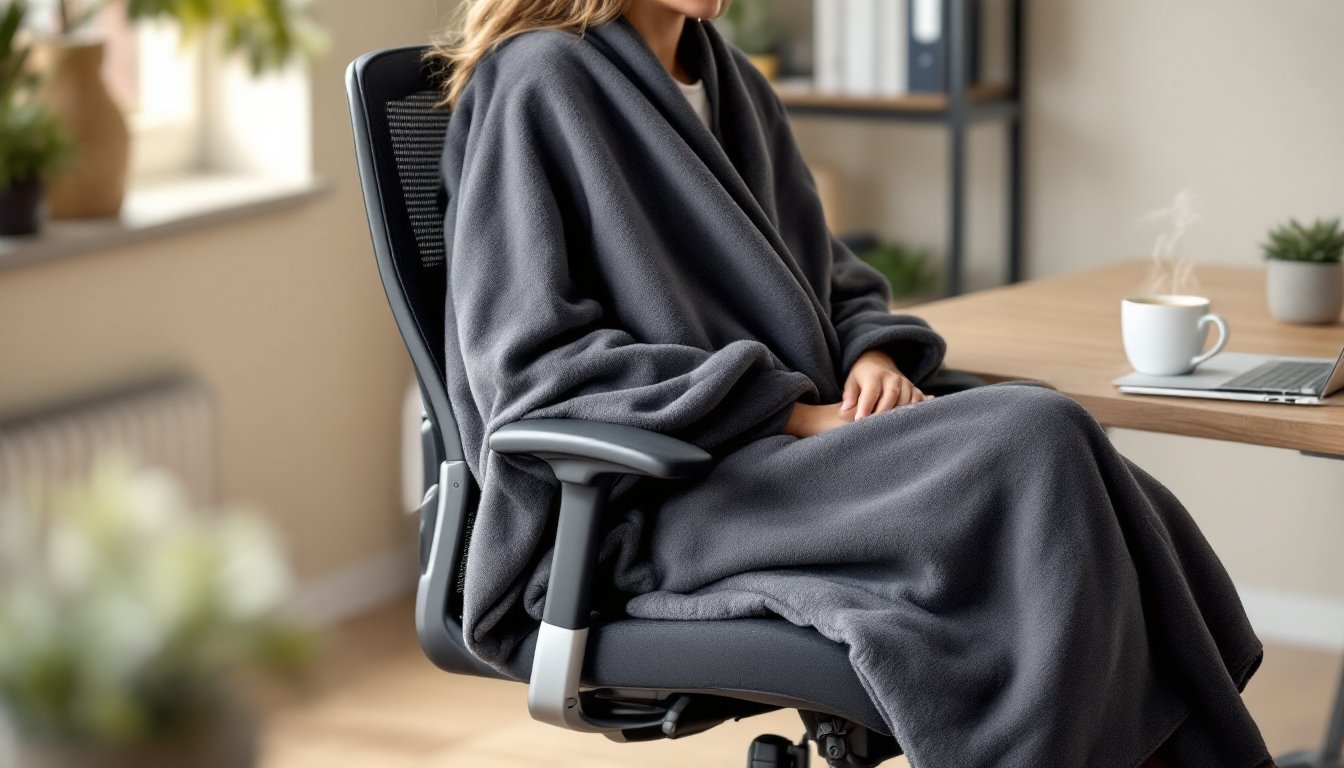
Cold offices drain productivity faster than a dead laptop battery. Whether it’s aggressive air conditioning in summer or inadequate heating in winter, sitting still for hours amplifies the chill. An office chair blanket solves this without negotiating thermostat wars with coworkers or cranking up the heat bill at home. Unlike bulky throws that slide off or bunch under armrests, purpose-built chair blankets attach securely and move with the user. They’re practical, washable, and surprisingly versatile, doubling as lap blankets for reading or extra warmth during video calls. This guide covers everything from material selection to building a custom version tailored to any workspace.
Table of Contents
ToggleKey Takeaways
- An office chair blanket provides localized warmth without heating an entire room, improving focus and reducing physical stress in cold work environments.
- Different styles—including lap blankets with foot pockets, elastic-corner wraps, and wearable designs—suit various workspaces and activity levels.
- Material selection (fleece, sherpa, wool, or cotton) directly impacts warmth retention, portability, and maintenance; fleece offers the best balance of affordability and durability for most users.
- A DIY office chair blanket project takes about two hours with basic sewing skills and costs less than store-bought alternatives.
- Proper washing, care, and storage—including avoiding fabric softener and removing pilling with a shaver—can extend a blanket’s lifespan to five years or more.
What Is an Office Chair Blanket and Why You Need One
An office chair blanket is a compact, often wearable blanket designed to attach to an office chair or drape over the user’s lap and legs while seated. Unlike standard throws, these feature elastic bands, pockets for feet, or wraparound designs that stay in place during movement.
The primary benefit is localized warmth without heating an entire room. Office buildings frequently over-cool spaces, and home offices in basements or garages can be drafty. A chair blanket keeps core body temperature stable, which improves focus and reduces the physical stress of sitting in cold environments for extended periods.
Another advantage: portability. Most fold into compact pouches or bags, making them easy to move between workspaces or pack for travel. They also reduce reliance on space heaters, which can trip breakers or create fire hazards in offices with shared circuits.
For remote workers, chair blankets eliminate the need to layer multiple sweatshirts or crank the thermostat, cutting heating costs noticeably over a winter season. In shared office environments, they offer a personal climate control solution that doesn’t affect others.
Types of Office Chair Blankets for Every Workspace
Wearable blankets with sleeves function like a backwards robe, covering shoulders, arms, and torso while leaving hands free. These work well in very cold spaces but can feel restrictive during rapid typing or reaching across a desk.
Lap blankets with foot pockets are compact rectangles (typically 40″ × 60″) with sewn pouches at one end. Feet slip inside, and the blanket drapes over legs and lap. This style stays put better than a standard throw and provides targeted warmth to lower extremities, which cool fastest during sedentary work.
Elastic-corner chair wraps feature elasticized edges that hook onto chair arms or backrests. They create a cocoon effect and won’t slide off when the user leans back or swivels. These are ideal for deep-focus tasks where the user won’t stand frequently.
Standard fleece or sherpa throws remain popular due to affordability and availability. While lacking attachment features, a quality 50″ × 60″ throw can be tucked under thighs and wrapped around the torso. They’re versatile beyond desk use but require occasional readjustment.
Weighted chair blankets (usually 5–10 lbs) combine warmth with gentle pressure, which some users find calming during high-stress work. The added weight keeps the blanket anchored, though it may feel too heavy for warm climates or extended wear.
How to Choose the Perfect Office Chair Blanket
Matching a blanket to the workspace and user habits prevents buyer’s remorse. Consider these factors before purchasing.
Size matters more than expected. A blanket that’s too small leaves gaps at the sides or feet: one that’s too large bunches under desk surfaces or gets caught in chair wheels. For most standard office chairs, 50″ × 60″ provides adequate coverage without excess fabric. Taller users or those with executive chairs may need 60″ × 70″.
Attachment method depends on activity level. Users who shift positions frequently or stand for calls benefit from elastic corners or foot pockets. Those who remain seated for long stretches can use a standard throw.
Weight affects both warmth and portability. Lighter fleece (around 1 lb) packs easily but offers minimal insulation in truly cold rooms. Heavier sherpa or plush materials (2–3 lbs) provide better heat retention but feel cumbersome if moved multiple times daily.
Material Matters: Fabric Options Explained
Fleece (polyester microfiber) is the workhorse of chair blankets. It’s affordable, machine-washable, quick-drying, and resists pilling for dozens of wash cycles. Fleece breathes reasonably well, making it suitable for mild to moderate cold without causing overheating. Most home crafting projects recommend fleece for beginners due to its forgiving sew-through and no-fray edges.
Sherpa combines a smooth fleece exterior with a dense, wool-like reverse side. It traps heat exceptionally well, ideal for poorly insulated spaces, but can feel too warm in climate-controlled offices. Sherpa also sheds more than standard fleece and may require lint-rolling.
Wool blends offer natural temperature regulation and moisture-wicking, useful in environments where users alternate between warm and cool zones. True wool can be scratchy: look for merino or cashmere blends for softness. Wool requires more careful laundering (often hand-wash or delicate cycle) and costs significantly more than synthetic options.
Cotton or cotton-blend waffle weave provides breathable warmth suitable for year-round use in moderate climates. It’s less effective in extreme cold but feels lighter and less cloying than fleece. Cotton blankets tend to wrinkle and take longer to dry.
Heated electric blankets are available in chair-friendly sizes with USB or wall-plug power. These deliver adjustable warmth but introduce cord management challenges and potential electrical hazards in offices with cluttered power strips. Never use a heated blanket with a frayed cord or near water sources.
Creative Ways to Use Your Office Chair Blanket
Beyond desk warming, chair blankets adapt to various scenarios.
During video calls, drape the blanket over legs and lower torso to stay warm while maintaining a professional appearance on camera. Solid, neutral colors avoid visual distraction.
In multi-use home offices that double as guest rooms or reading nooks, a chair blanket can shift between uses, office warmth during the day, couch throw in the evening. Choose a design that complements the room’s decor rather than clashing with it.
For outdoor workspaces on patios or screened porches, a weather-resistant fleece blanket extends the usable season into cooler months. Pair it with a laptop shield to reduce glare and a table umbrella for wind protection.
Drafty workshops or garages used for hobbies benefit from chair blankets during detail work like painting miniatures or assembling electronics. Many tested recommendations from Good Housekeeping highlight fleece as easy to clean after exposure to dust or sawdust.
Travelers working from hotel rooms or co-working spaces can pack a compact chair blanket to compensate for unpredictable climate control. It also serves as a seat cushion on hard chairs or a barrier against questionable upholstery cleanliness.
DIY Office Chair Blanket: Make Your Own Custom Cover
Building a custom chair blanket allows precise sizing and fabric choice. This project requires basic sewing skills and about two hours.
Materials needed:
- 2 yards of fleece or sherpa fabric (60″ wide)
- 1-inch elastic band, 24–30 inches total
- Thread matching fabric color
- Fabric scissors or rotary cutter
- Sewing machine (a basic straight-stitch model works fine)
- Pins or sewing clips
- Measuring tape
Steps:
-
Measure and cut fabric. For a standard lap blanket with foot pocket, cut the main piece to 50″ × 60″. Cut a separate rectangle 18″ × 24″ for the foot pocket.
-
Hem all edges of the main piece. Fold each edge under ½ inch, pin, then fold again and stitch ¼ inch from the inner fold. This creates a clean edge and prevents fraying.
-
Create the foot pocket. Fold the 18″ × 24″ piece in half (right sides together) to form an 18″ × 12″ pocket. Sew along the sides with a ½-inch seam allowance, leaving the top open. Turn right-side out and press.
-
Attach the pocket to one short end of the main blanket. Center it width-wise and pin the open edge to the blanket’s hemmed edge. Topstitch ¼ inch from the edge to secure.
-
Add elastic corners (optional). Cut elastic into four 6-inch pieces. Fold each into a loop and pin one at each corner of the blanket, sandwiching the loop between the hem layers before stitching. These hook over chair arms or the backrest.
-
Reinforce stress points. Backstitch at the beginning and end of all seams, especially where the pocket attaches and at elastic anchor points. These areas experience the most tension during use.
For a no-sew version, use fusible hem tape and an iron to create hems, and skip the foot pocket entirely. This works for lightweight fleece but won’t hold up as well over time. Detailed plans for beginner-friendly textile projects are available at Ana White, though the site focuses more on furniture than soft goods.
Customization ideas:
- Add a zipper along one long edge to create a sleeping-bag style wrap
- Use contrasting fabric for the pocket or binding
- Sew in a hidden pocket on the back for storing a phone or remote
- Embroider initials or a simple design for personalization
Care and Maintenance Tips for Longevity
Proper care extends the life of any chair blanket and maintains softness.
Washing frequency depends on use. Office blankets used daily over clothing can go 2–3 weeks between washes. Those used directly against skin or in dusty environments need weekly laundering.
For fleece and sherpa, machine wash in cold water on a gentle cycle with mild detergent. Avoid fabric softener, which coats fibers and reduces their insulating ability. Tumble dry on low heat or air dry: high heat can melt synthetic fibers or cause shrinkage.
Wool blends require hand washing or a delicate cycle in cool water with wool-safe detergent. Lay flat to dry on a clean towel, reshaping as needed. Never wring or twist wool, as it distorts the weave.
Spot cleaning handles minor spills without a full wash. Blot (don’t rub) the area with a damp cloth and mild soap. For greasy stains, apply a small amount of dish soap directly to the spot before washing.
Storage matters during off-season. Fold blankets loosely and store in a breathable cotton bag or on a shelf, avoid airtight plastic bins, which can trap moisture and encourage mildew. Add cedar blocks or lavender sachets to deter moths if storing wool.
Pilling (small fabric balls) is common with fleece after repeated use. Remove pills with a fabric shaver or sweater comb rather than picking them by hand, which can damage the underlying weave. Washing the blanket inside-out reduces friction and slows pilling.
Inspect elastic attachments and seams every few months. Loose threads or stretched elastic are easy to repair with a few quick stitches, preventing larger failures later. A well-maintained fleece blanket can last five years or more with regular use.